The Athlete’s Hidden Advantage
The Hidden Advantage: Hypnotherapy & Mindfulness
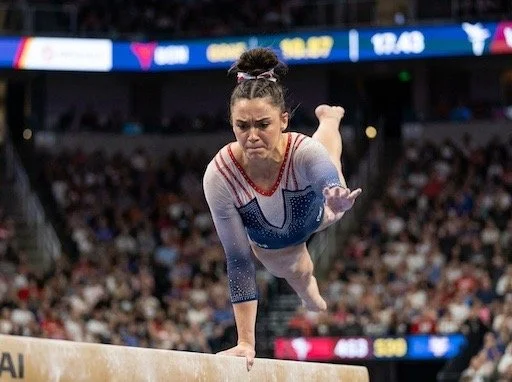
At the highest levels of sport, medals are decided not just by strength and skill—but by mental mastery. In gymnastics, where routines demand precision under pressure and fractions of imperfection can cost titles, athletes increasingly turn to tools like hypnotherapy and mindfulness to strengthen their psychological edge.
Why Mental Training Matters in Elite Gymnastics
Gymnastics is uniquely demanding: athletes must execute complex skills with near-perfect timing, rapid decision-making, and calm focus, all while managing fear, stress, and the expectations of competition. This creates an environment where small mental advantages can translate into big competitive gains.
Hypnotherapy: Rewiring the Champion’s Mind
Hypnotherapy involves guided suggestion during a focused, relaxed state to tap into subconscious patterns—helping athletes build confidence, reduce anxiety, and sharpen focus. In the world of elite sports, it is considered a mind-body intervention that complements physical training. **"Wikipedia"
How Gymnasts Use Hypnotherapy
Handling Competition Pressure: Brazilian Olympic champion Arthur Zanetti reportedly used hypnosis to help manage competition stress and prepare mentally for performance.
Visualization & Skill Execution: Research shows that under hypnosis, nationally ranked gymnasts were able to visualize and execute difficult tricks they had struggled with for long periods, reducing timing errors and enhancing performance. **The Center of Success
Confidence & Emotional Regulation: Case studies suggest hypnotherapy can improve focus, build self-confidence, and help manage emotional responses like fear or anxiety.
What Hypnotherapy Targets
**Stronger focus under pressure
**Replacing negative self-talk with positive performance cues
**Reducing anxiety and fear responses
**Enhancing subconscious support for training goals
According to broad definitions of mind-body practices, hypnotherapy sits alongside techniques like guided imagery and meditation, all harnessing mental processes to enhance physical performance. Wikipedia
**Mindfulness: Being Present, Staying Unshakable
Mindfulness is the practice of paying attention to the present moment with non-judgment—a skill that directly combats distraction, overthinking, and pressure. Elite athletes across sports are integrating mindfulness to improve focus, emotional stability, and resilience. **"Dr Paul McCarthy"
Benefits for Gymnasts
-Improved Focus & Flow: Mindfulness training has been linked with higher flow states (the “in-the-zone” performance where focus and execution feel effortless), which are critical in gymnastics.
-Reduced Competitive Anxiety: Athletes trained in mindfulness experience less performance anxiety and a sharper ability to direct attention on the task, not worries. Dr Paul McCarthy
-Enhanced Resilience: Mindful routines help gymnasts recover quickly from mistakes during a routine, reducing the likelihood of a single error derailing a whole performance. PMC
Teams and coaches in Olympic programs now often include structured mindfulness-based interventions—such as Mindfulness-Acceptance-Commitment (MAC) or Mindful Sport Performance Enhancement (MSPE)—to help athletes combine present-moment awareness with committed action toward performance goals. **"Dr Paul McCarthy"
Real Elite Integration: Hypnotherapy + Mindfulness in Practice
**Some Olympic programs blend both approaches:
Pre-competition routines might combine meditation, breathwork, and visualization to induce calm focus.
Hypnotherapy sessions before major events help replace stress responses with confidence and clear execution scripts.
Mindfulness practices are embedded into daily training to maintain consistent performance psychology.
Together, these approaches help gymnasts succeed not merely by training their bodies to perform skills, but by training their minds to navigate pressure, doubt, and distraction—turning psychological resilience into measurable competitive advantage.
Why It Works: The Science Behind the Methods
Both hypnosis and mindfulness are understood within sports psychology as methods to optimize the mental state for performance:
Hypnosis can alter brain activity patterns involved in attention and emotional regulation, embedding positive response habits at deeper levels.
Mindfulness has strong research support showing improvements in focus, performance consistency, and psychological wellbeing across elite athletes. **"Dr Paul McCarthy"
In elite sports where fractions of a point decide medals, the mental edge created by these techniques isn’t just supportive—it’s strategic.
Conclusion: Mental Training for Medal-Worthy Minds
Olympic-level gymnasts are increasingly turning to hypnotherapy and mindfulness not as an afterthought, but as core components of their training. These methods empower athletes to enter competitions with enhanced focus, reduced anxiety, and the psychological resilience needed to perform at their best when it counts the most.
Whether it’s visualizing a perfect landing under hypnosis or locking into the present moment through mindfulness, the champions of today are proving that mental mastery is as crucial as physical prowess.
Arthur Zanetti (Brazil) — "Hypnotherapy for Pressure Control"
Arthur Zanetti is one of the most accomplished still-rings specialists in Olympic history, winning Olympic gold (London 2012) and Olympic silver (Rio 2016). His event demands extreme strength combined with absolute calm—making psychological control as important as physical preparation.
Mental Challenge
Despite world-class physical conditioning, Zanetti experienced intense pre-competition anxiety, particularly during Olympic finals where even slight tremors or loss of concentration could result in major deductions. Managing pressure became a decisive performance factor.
Hypnotherapy Intervention
In interviews with Olympic media, Zanetti acknowledged using hypnosis-based mental training as part of his psychological preparation. The work focused on:
**Deep relaxation before competition
**Visualization of flawless still-ring holds and dismounts
**Replacing anxiety responses with automatic calm and confidence
Hypnotherapy sessions aimed to condition his subconscious responses so that pressure triggered focus rather than tension.
**Performance Outcomes
**Improved emotional regulation during finals
**Greater consistency in high-stakes routines
**Sustained elite performance across multiple Olympic cycles
Zanetti’s ability to remain composed under Olympic pressure was a defining factor in his medal-winning performances.
Why This Case Matters
This case illustrates how hypnotherapy can: -Reduce performance anxiety at the subconscious level -Reinforce confidence in highly technical, pressure-sensitive events -Allow physical training to be fully expressed in competition -In still rings—where stability and control are judged as much as strength—mental calm becomes a competitive weapon.
**Identified References
International Olympic Committee (IOC). “Arthur Zanetti on hypnosis and mental preparation.” Olympics.com
Barker, J. B., et al. (2013). Hypnosis and imagery in elite sport performance. Journal of Applied Sport Psychology
International Olympic Committee. Athlete mental preparation and performance psychology. Olympics Studies Centre
Weinberg, R. & Gould, D. (2018). Foundations of Sport and Exercise Psychology. Human Kinetics
Kelly-Johnston, Jaye (2023). Sports Performance and Anxieties.