The Relationship Between Social Media and Teen Mental Health
Understanding the Impact of Social Media on Teen Mental Health
For many families in the U.S., U.K., Canada, and Australia, social media is part of daily life — from checking stories in the morning to late-night scrolling. Understanding the social media effects on teen mental health helps caregivers, educators, and teens themselves make smarter choices that protect wellbeing without demonizing technology.
The Relationship Between Social Media and Teen Mental Health
Defining "social media effects on teen mental health" and why it matters
- Scope and terminology: When we discuss social media effects on teen mental health we refer to platforms (Instagram, TikTok, Snapchat, YouTube, Twitter/X, Discord), typical adolescent age ranges (roughly 12–18), and patterns of use (daily active use, passive scrolling, content creation, messaging).
- Why it matters: The teen years are a sensitive period for identity formation, social learning, and brain development. Online experiences can interact with emotional and cognitive development to produce both positive outcomes (connection, identity exploration, access to resources) and negative ones (anxiety, depressive symptoms, sleep loss).
- Key behaviors: Passive consumption (scrolling), active engagement (posting/commenting), and social feedback loops (likes, followers) have different psychological impacts.
Evidence: research on the "impact of social media on youth"
- Multiple large-scale surveys and reviews indicate a correlation between heavy social media use and increased rates of anxiety, depressive symptoms, and body-image concerns in adolescents, though establishing causation is complex.
- Pew Research Center (2018) found that 95% of U.S. teens have access to a smartphone and 45% report being online “almost constantly,” underlining exposure risk. Pew Research
- The Royal Society for Public Health (UK) 2017 report "#StatusOfMind" ranked Instagram and Snapchat as platforms most associated with increases in anxiety, depression, and poor sleep among young people. RSPH report
- Recent systematic reviews and meta-analyses show small-to-moderate associations between intensive use and poorer mental health outcomes, with variability by age, gender, culture, and baseline vulnerability.
- Interpretation caution: Many studies are cross-sectional; directionality is not always clear (e.g., does anxiety drive more social media use, or vice versa?). Longitudinal studies suggest reciprocal influences — social media can both reflect and amplify existing problems.
Short-term vs long-term effects on adolescents
- Short-term effects: Instant mood changes after exposure to social comparison, fear of missing out (FOMO), relief/validation from positive feedback — often lasting minutes to hours.
- Long-term effects: Repeated exposure to curated images, cyberbullying, disrupted sleep patterns, and chronic social comparison can contribute to persistent anxiety, depressive episodes, or altered self-esteem trajectories over months and years.
- Risk profile factors: Frequency and intensity of use, type of engagement (passive vs active), presence of offline support, and pre-existing mental health conditions change risk levels.
Transition: With the relationship and evidence in view, let’s look at specific mental health issues linked to teen social media use.
Common Mental Health Issues Linked to Teen Social Media Use
"Teen social media mental health issues": anxiety, depression, and sleep disruption
- Anxiety: Teens may experience heightened worry about peer evaluation, message response times, and public image.
- Depression: Prolonged negative comparisons, exposure to negative content, or social isolation linked to online behavior can contribute to depressive symptoms.
- Sleep disruption: Nighttime device use delays sleep onset and reduces sleep quality due to both light exposure and cognitive/emotional arousal.
- Warning signs: Withdrawal from offline relationships, declining grades, mood swings, irritability around device use, and persistent tiredness.
- Stat: According to the American Academy of Pediatrics and multiple sleep studies, screen time within the hour before bed reduces total sleep time and sleep quality; teens require 8–10 hours of sleep nightly for optimal functioning. AAP HealthyChildren.org
"Social media anxiety in adolescents" and social comparison
- Curated feeds present idealized views of peers and influencers. Adolescents are particularly sensitive to peer evaluation; this increases vulnerability to social anxiety when online metrics (likes, comments) become measures of worth.
- Mechanisms: Anticipation of feedback, threat of exclusion, and micro-rejections (ignored messages or low-engagement posts) produce social stress that spills into offline life.
- Example: A teen repeatedly comparing their body, social life, or achievements to influencers may experience escalating anxiety that triggers avoidance of social events or school.
"Social media and self-esteem in teenagers": identity and body image
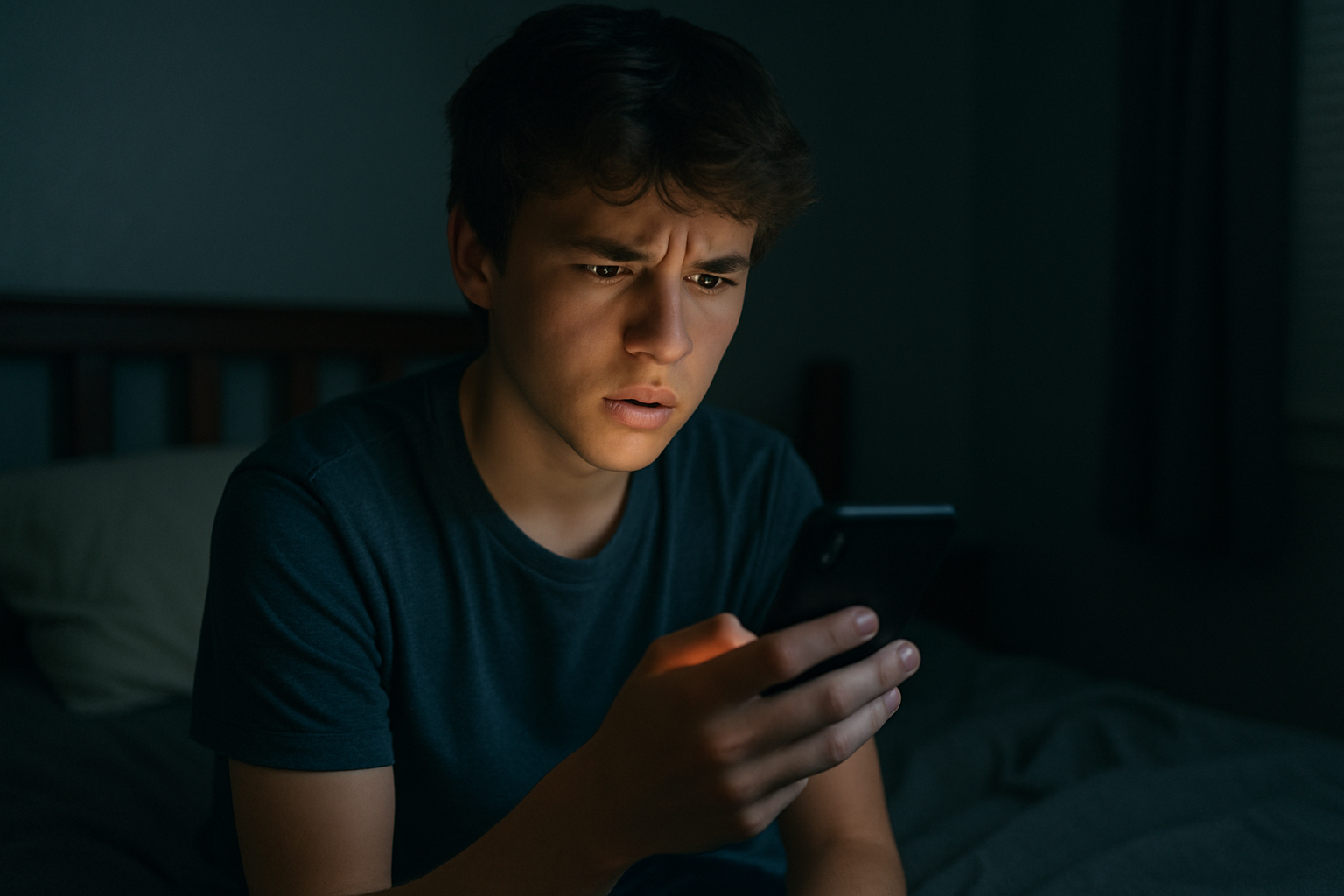
- Filters, editing apps, and influencer culture create narrow beauty and success standards.
- This can disrupt authentic identity development when teens feel compelled to present an idealized persona.
- Protective factors: Positive peer commentary, body-positive communities, and active, critical engagement (e.g., media literacy) can mitigate harm.
Transition: Understanding mechanisms helps tailor interventions — here’s how social media creates these effects and what we can do about them.
Mechanisms: How Social Media Influences Youth Mental Health
Social comparison, validation loops, and feedback mechanisms
- Social platforms create reward systems: likes, follower counts, and comments act as social rewards that reinforce posting behaviors.
- Algorithms amplify emotionally engaging content — often sensational or appearance-based posts — increasing exposure to social comparison triggers.
- This validation loop can lead to compulsive checking, mood volatility, and identity tied to metrics.
Exposure to harmful content and cyberbullying
- Harassment, hate speech, and risky challenge trends circulate rapidly and can be repeated (screenshots, resharing), prolonging victimization.
- Cyberbullying has been associated with increased risk of depression, anxiety, and even self-harm in vulnerable teens.
- Stat: Surveys suggest a significant portion of teens report experiencing online harassment at some point; robust school reporting and platform safety features vary by region. Pew Research on online harassment
Sleep disruption, attention, and cognitive load
- Notifications, multitasking across apps, and constant context-switching increase cognitive load and reduce sustained attention.
- Blue light exposure from screens can suppress melatonin, delaying sleep onset.
- The resulting sleep deficit worsens mood regulation, impulse control, and academic performance — a cascading effect on mental health.
Transition: Prevention and mitigation require practical strategies at home, in schools, and for teens themselves.
Strategies to Mitigate Social Media Stress for Teens
Practical "strategies to mitigate social media stress" for families
Set healthy boundaries:
- Device-free zones (dining table, bedrooms) and device curfews (e.g., stop screens 60 minutes before bedtime).
- Family tech plan: list rules, privacy expectations, and allow for adjustments as teens mature.
Co-viewing and curiosity-based conversations:
- Ask open-ended questions: “What made you laugh today on social media?” or “Has anything online bothered you this week?”
- Use nonjudgmental language and reflect feelings: “It sounds like that post made you feel left out.”
Model behavior:
- Parents demonstrating balanced device use reduce perceived hypocrisy and increase adherence.
Use platform tools:
- Block/report features, mute functions, and “take a break” reminders on apps.
Sample family plan (code block):
Family Social Media Plan
- Weeknights: No devices after 9:30 PM
- Bedrooms: devices out, chargers in kitchen
- Check-ins: weekly family conversation about online experiences
- Safety: report/keep evidence of bullying; parents will not repost sensitive content
School and community interventions to support "mental health awareness for teens"
- Digital literacy curricula: Teach critical thinking about media, algorithmic influence, privacy, and consent.
- Peer support and mentorship: Peer-led groups reduce stigma and encourage help-seeking.
- Counselor training: School counselors trained in digital wellbeing can identify and support students affected by online stress.
- Policies and reporting: Clear anti-bullying policies, safe reporting channels, and partnerships with platform moderators can reduce harm.
- Community partnerships: Libraries, sports clubs, and youth centers can provide offline spaces for identity exploration.
Individual coping strategies for teens: building resilience and self-esteem
- Mindfulness and intentional use: Practices like short guided breathing or journaling after heavy social media sessions reduce rumination.
- Scheduled “digital detox” blocks: Short breaks (a few hours to a weekend) can reset compulsive checking.
- Foster offline hobbies: Arts, sports, volunteering, and other activities build competence and social connections outside screens.
- Cognitive reframing: Recognize curated content is not the full story — practice gratitude and self-compassion.
- Practical tools: Use built-in screen time trackers, focus apps (e.g., app timers), and media-literacy resources to remain intentional.
Transition: Families and schools need simple ways to measure whether interventions are working, and to know when to escalate to professionals.
Measuring Progress and When to Seek Professional Help
Tracking changes: metrics and signs of improvement
- Practical metrics:
- Sleep time and quality (hours slept; fewer awakenings).
- Mood logs: daily check-ins using simple scales (1–5).
- Academic and social engagement markers (attendance, participation).
- Non-invasive tracking: Encourage teens to keep private journals or mood-tracking apps rather than parental surveillance; the goal is support, not punishment.
- Signs of improvement: More stable mood, better sleep, fewer impulsive posts, improved school performance, and increased face-to-face social activity.
When symptoms require professional support
- Seek professional help if:
- Persistent depressive symptoms (lasting 2+ weeks) such as hopelessness, loss of interest, or major changes in sleep and appetite.
- Self-harm thoughts or talk about suicide — this requires immediate crisis intervention.
- Severe anxiety interfering with school or daily functioning.
- Types of professionals:
- School counselors or psychologists for early intervention.
- Licensed therapists (CBT, DBT) for targeted treatments.
- Child and adolescent psychiatrists for severe cases or when medication may be indicated.
- Crisis resources: Always call emergency services if there is immediate danger. Many countries have crisis hotlines (e.g., 988 in the U.S. for suicide prevention).
Resources and tools: guides, hotlines, and educational materials
- Trusted organizations and toolkits:
- Helpful apps and tools:
- Screen time trackers (built into iOS and Android).
- Focus apps (Forest, Focus@Will) for reducing multitasking.
- Mindfulness apps with teen-friendly modules (Headspace for teens, Smiling Mind).
- Educational resources for schools:
- Digital literacy curricula (commonsensemedia.org)
- Peer support training materials and safe-reporting templates.
Conclusion
The impact of social media on youth is nuanced: social platforms can offer connection, identity exploration, and information — but they also pose risks for anxiety, depression, sleep disruption, and lowered self-esteem when use is excessive, uncritical, or hostile. Addressing teen social media mental health issues requires balanced, evidence-based approaches that combine family routines, school programs, individual coping skills, and access to professional care.
Final actionable steps:
- Increase mental health awareness for teens by teaching digital literacy and open communication.
- Apply strategies to mitigate social media stress: device curfews, family tech plans, and supportive conversations.
- Support teens in managing social media anxiety in adolescents through mindfulness, offline activities, and, when needed, professional help.
- Encourage policymakers, platform developers, educators, and parents to prioritize teen wellbeing and fund longitudinal research into the long-term effects of online life.
Call to action: If you're a parent, educator, or policymaker, start one concrete step this week — schedule a family tech conversation, introduce a school digital-wellness lesson, or share a trusted resource with a teen you care about. To learn more and get toolkits for your school or home, visit the linked resources above and keep the conversation going.
"Technology is a tool — not destiny. With the right strategies and support, teens can enjoy the benefits of connection while minimizing harm."