Emotionally Intelligent: Master Your EQ Skills
Emotionally Intelligent
Have you ever wondered why some people navigate workplace drama, personal setbacks, and complex relationships with such effortless grace? The secret isn't just raw intellect; they are simply emotionally intelligent. If you have ever asked yourself, "what do you know about emotional intelligence?" you are certainly not alone. In today’s fast-paced, team-focused world, it is important to understand your emotional intelligence (EQ).
It matters just as much as your traditional IQ.
But exactly what does eq stand for? It stands for Emotional Quotient. It measures a person’s ability to recognize, understand, and manage their own emotions. It also measures their ability to understand and manage the emotions of others. Let’s look at what it means to have a high emotional quotient.
We’ll cover how it affects your daily life.
We’ll also share steps you can take to build this key skill.
The Great Debate: IQ vs. EQ
When analyzing EQ vs IQ for career success, research shows emotional skills often set top performers apart. When we look at standard cognitive intelligence, emotional intelligence often acts as a bridge. It turns raw intellectual potential into real human connection and leadership skills.
Individuals with high ei (Emotional Intelligence) can handle stress better, adapt to rapid changes, and lead teams more effectively. They thrive because their emotional quotient allows them to read a room and pivot their approach. Conversely, a lack of eq often results in poor communication, workplace friction, and strained personal relationships.
The Core Framework: What Makes Up EQ?
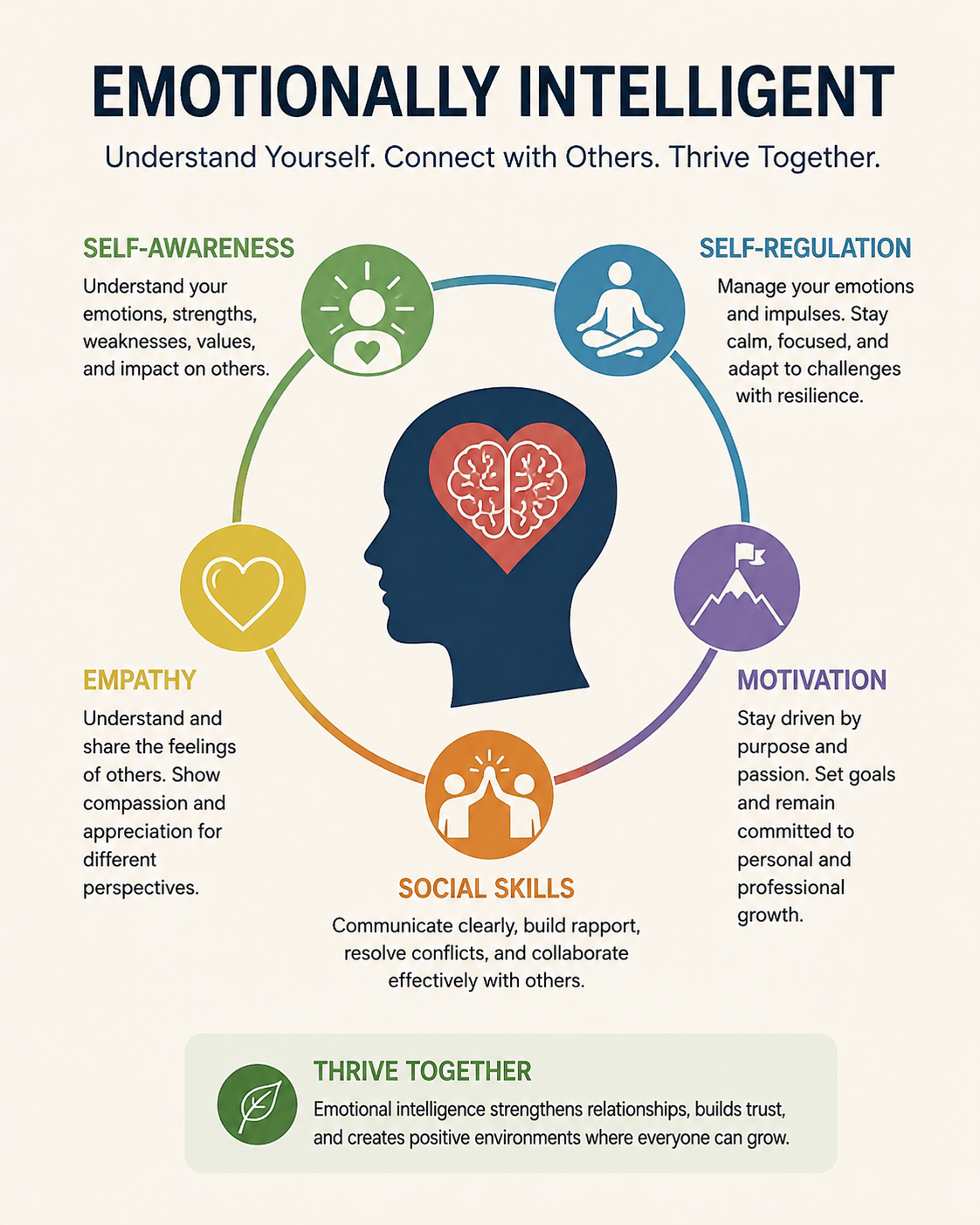
To truly grasp this concept, we must look at the structural components of emotional intelligence. Traditionally, psychologists refer to the 4 aspects of emotional intelligence: self-awareness, self-management, social awareness, and relationship management. However, when referencing Daniel Goleman's five pillars, internal motivation is also highlighted as a critical driving force.
1. Self-Awareness
This is the absolute foundation of being emotionally intelligent. It is the ability to recognize your own moods, emotions, and drives, as well as their effect on others. There are many practical ways to increase self-awareness. You can try daily journaling. You can meditate. You can also ask trusted peers for honest feedback.
2. Self-Management
Often called self management emotional intelligence, this pillar means knowing how to manage overwhelming feelings.
It helps you stay in control instead of letting emotions control you. Employ targeted emotional regulation exercises for stress, like deep breathing or a brief walk.
Practice specific techniques for better self-regulation to stay grounded during tough times.
3. Social Awareness
Empathy is the heartbeat of social awareness. To master it, you must understand the difference between cognitive vs affective empathy. Cognitive empathy is knowing what someone else is thinking. Affective empathy is sharing and feeling their emotions. Recognizing non-verbal communication cues offers major benefits of high social awareness and helps you read between the lines. On the other hand, missing these vital cues is one of the classic signs of low empathy in adults.
4. Relationship Management
This pillar focuses entirely on improving interpersonal relationship skills. In the workplace, it translates to active listening skills for leaders and mastering social skills for better teamwork. In your personal life, it empowers you to develop effective conflict resolution strategies for couples.
Recognizing the Signs: High vs. Low EQ
So, what are the attributes of emotional intelligence in everyday action? Highly emotionally intelligent people share common traits.
They adapt easily.
They do not hold grudges.
They are very good at dealing with toxic people. They possess high emotional intelligence because they intentionally pause before they react.
On the flip side, people who struggle with EQ may often play the victim. They may refuse critical feedback. They may not understand why others are upset with them. If you focus on self-improvement, adopting a strong development EQ mindset should be your top priority. It acts as a necessary buffer against modern burnout and interpersonal fatigue.
Actionable Steps: How to Elevate Your EQ
A common question arises for those looking to grow: can emotional intelligence be learned? Absolutely. Unlike IQ, which remains relatively fixed throughout your life, your EQ is highly malleable. If you want to build emotional intelligence, start with daily practice.
If you want to improve it as a group, start with daily practice.
Here are the most effective strategies if you are looking for how to become more emotionally intelligent:
Track Your Triggers: If you want to learn how to improve emotional awareness, start tracking your emotions.
This can also help you learn how to develop emotional awareness. Keep an emotion log to identify exactly who or what triggers your stress.
Embrace the Pause: Wondering how to increase eq or how to improve eq in the heat of the moment? The secret is the "pause." Taking a five-second breath before responding to an upsetting email helps you avoid defensive, emotionally charged reactions.
Practice Mindfulness: For those struggling with nervous energy, overcoming social anxiety through mindfulness is incredibly effective. It grounds you in the present moment, naturally enhancing emotional intelligence by preventing your brain from catastrophizing.
Actively Seek Feedback: If you are asking how to gain emotional intelligence, look to your peers, partner, or mentors. Constructive criticism highlights emotional blind spots you might not be able to see yourself.
Listen to Understand, Not to Reply: To genuinely boost emotional intelligence, actively put yourself in others' shoes. Let people finish their sentences. True listening is a rare and highly respected trait.
Be Patient with Yourself: Figuring out how to build emotional resilience and self-control takes time. Whether you are researching how to improve emotional intelligence, keep this in mind. If you are looking for ways to increase emotional intelligence in your team, remember this. Lasting behavior change takes consistency.
Final Thoughts
Being emotionally intelligent is a lifelong journey rather than a final destination. It requires an ongoing commitment to understanding yourself and having grace for others. By practicing self-control, you can do better at work and in life.
When you notice social cues, you understand other people better.
When you manage relationships with empathy, you build stronger connections. Start small today—take a breath, observe your feelings, and watch as your emotional quotient transforms your world.