Psychiatrist vs Psychologist
The Differences Between Psychologists and Psychiatrists
Navigating the mental health landscape can feel overwhelming. It can be worse when you face many confusing professional titles. When you look for help for yourself or someone you care about, it can be hard to know the difference between psychologists and psychiatrists.
While both fields aim to improve mental well-being, the debate over psychiatry vs psychology shows key differences. They differ in treatment, training, and patient care. Let’s break down the key difference between psychologists and psychiatrists. This will help you choose what’s best for your mental health.
Decoding the Credentials: Who is Who?
To understand clinical psychologist vs psychiatrist credentials, we first need to review educational requirements for mental health practitioners.
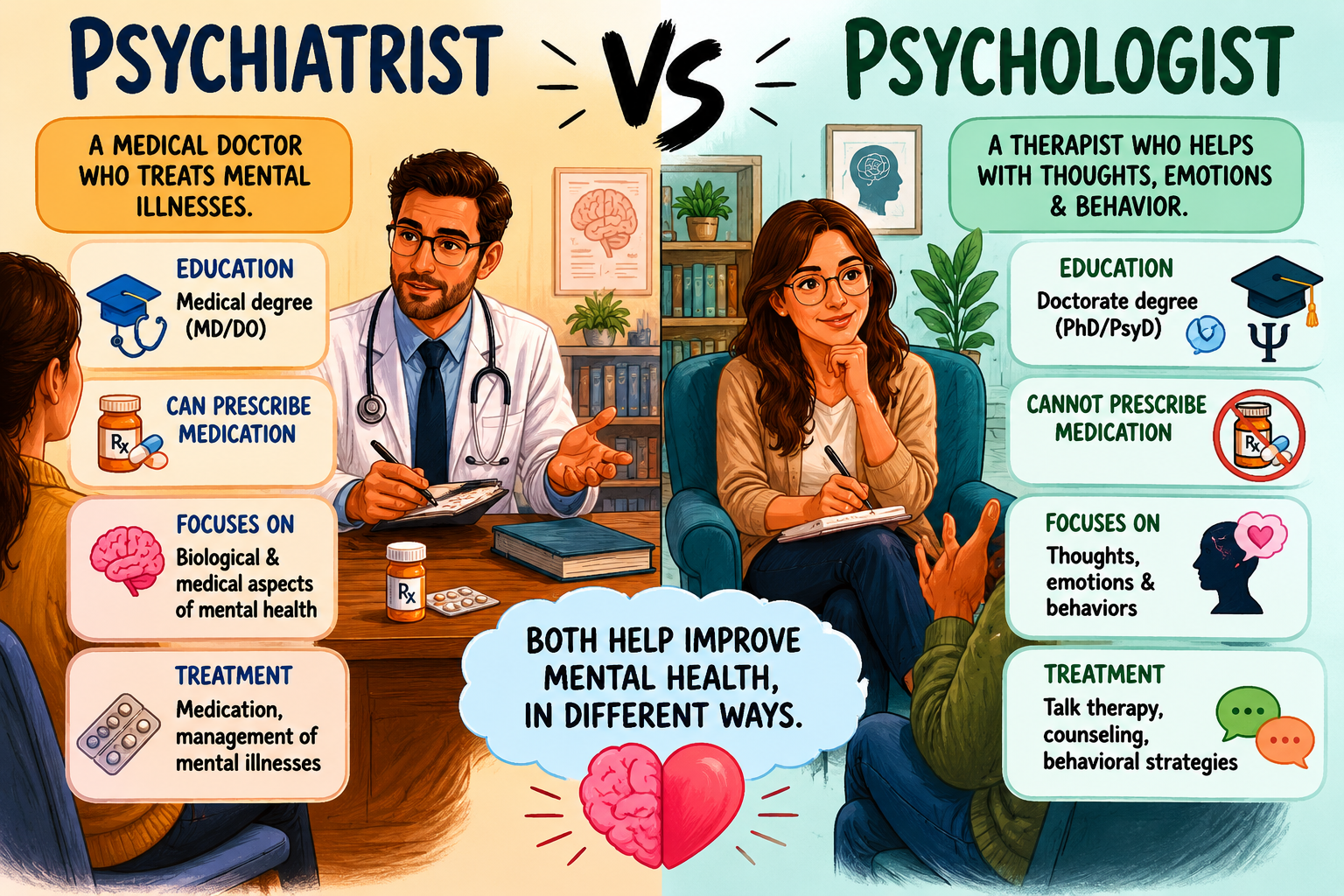
Is a psychiatrist a doctor? Yes. Psychiatrists are medical doctors (M.D. or D.O.) who have completed medical school followed by a specialized residency in psychiatry. Because of this extensive medical background, they understand the complex relationship between physical illnesses and mental health.
On the other hand, are psychologists doctors? Yes, but they hold a doctoral degree in psychology (such as a Ph.D. or Psy.D.), not a medical degree. If you are asking, “Is a clinical psychologist a doctor?” the answer is yes in an academic sense. But they do not practice medicine. This distinction between a medical school vs doctoral degree in psychology is the foundational difference between clinical psychologist and psychiatrist practices.
To clear up a common, yet entirely different confusion: what is the difference between a psychologist and a physiatrist? A physiatrist is a medical doctor who specializes in physical medicine and rehabilitation—completely unrelated to mental health! And if you are researching the difference between a psychologist and another psychologist, you are likely comparing sub-specialties. For example, you may compare a clinical psychologist with a counseling psychologist.
Diagnostics: How Do They Evaluate Mental Health?
Both professions are highly trained in understanding the dsm-5 diagnostic process (the standard classification of mental disorders).
What do psychologists do when you first meet them? They typically conduct in-depth interviews and administer standardized psychological tests to assess emotional and cognitive functioning. So, can a psychologist diagnose mental health conditions? Absolutely. If you are wondering, does psychologist diagnose disorders like depression, ADHD, or PTSD? Yes, they do.
A psychiatrist will also diagnose, but their approach often leans toward a medical perspective. This highlights the contrast between a brief psychiatric evaluation and psychological testing. Psychological testing can take several hours. It may include long questionnaires.
Treatment Approaches: Therapy vs. Medication
The most noticeable contrast between a psychologist vs psychiatrist lies in how they treat their patients.
Because they are medical doctors, psychiatrists primarily focus on the biological aspects of mental illness. They are experts in psychopharmacology vs psychotherapy treatment, spending a significant portion of their time managing mental health medication.
This brings up a crucial question: can a psychologist prescribe medication? In the vast majority of locations, no. (A few states allow prescribing privileges for psychologists who undergo rigorous, specialized psychopharmacology training). Generally, if you wonder what kind of therapist can prescribe medication, the answer is almost always a psychiatrist.
In some cases, a specialized psychiatric nurse practitioner can also prescribe medication.
Psychologists, conversely, specialize in psychotherapy. They utilize evidence-based treatments like Cognitive Behavioral Therapy (CBT) to help patients develop coping strategies. Both fields recognize the strong benefits of talk therapy and medication. Professionals often agree that using both works best.
Where Do Therapists Fit In?
The mental health field is filled with overlapping terminology. You might wonder, what is a therapist called in a clinical setting? Or, what is another name for therapist? The term "therapist" is an umbrella term that includes counselors, social workers, and psychotherapists.
This leads to a web of common questions:
Is a psychologist a therapist? Yes, clinical and counseling psychologists act as therapists, but not all therapists have doctoral-level psychology degrees. This is the main difference between therapist and psychologist (or the psychologist and therapist difference).
Is a therapist a doctor? Or, is a therapist a physician? Usually, no. Unless they hold a specific doctorate, they are not doctors, and they are never physicians.
Is a psychotherapist a medical doctor? No. Psychotherapists focus purely on talk therapy. Can a psychotherapist prescribe medication? No, they cannot.
Is a psychiatrist a therapist? They can be. Some psychiatrists provide talk therapy alongside medication management, but today, many strictly handle the medical side. This distinction is the core of the psychotherapist vs psychiatrist debate and the psychiatrist psychotherapist difference.
Ultimately, understanding the therapist vs psychiatrist vs psychologist triad means knowing each role’s scope of practice. Therapists and psychologists focus on the role of a psychotherapist in mental health care. Psychiatrists focus on brain chemistry and medicine. This is the fundamental difference between therapist and psychiatrist.
Navigating Specific Mental Health Concerns
When deciding whether a clinical psychologist vs psychiatrist is right for you, consider your specific symptoms.
Psychiatrist vs psychologist for anxiety and depression: If your symptoms are mild to moderate, starting with a psychologist or therapist for talk therapy is highly effective. If your symptoms are severe, treatment-resistant, or deeply impacting your physical ability to function, consulting a psychiatrist for medication may be necessary.
Who should I see for a bipolar diagnosis? Bipolar disorder heavily relies on medication for mood stabilization. While a psychologist can diagnose it, a psychiatrist is absolutely essential for safe, long-term management.
How to Choose the Right Mental Health Professional
Deciding whether you need a psychologist or psychiatrist does not have to be a stressful ordeal. Here are some actionable steps to help you decide:
Assess Your Needs: Are you looking to process past trauma, change behavioral patterns, or develop coping skills? A psychologist or therapist is your best starting point.
Evaluate Physical Symptoms: Do your mental health struggles cause bad insomnia, panic attacks, or trouble getting out of bed? A psychiatrist can offer immediate chemical relief to help you function while you do the therapeutic work.
Consult Your Primary Care Doctor: They can provide a baseline evaluation and refer you to the appropriate specialist.
Embrace a Team Approach: The most effective care often relies on a multidisciplinary approach to mental wellness. It is very common to see a psychiatrist once a month for medication management. At the same time, you may see a psychologist weekly for talk therapy.
Ultimately, understanding the distinctions within mental health care ensures you get the exact support you need. Whether you start with a therapist, psychologist, or psychiatrist, that first step matters most. Taking action to get help is the key decision.